 Image 1 of 5
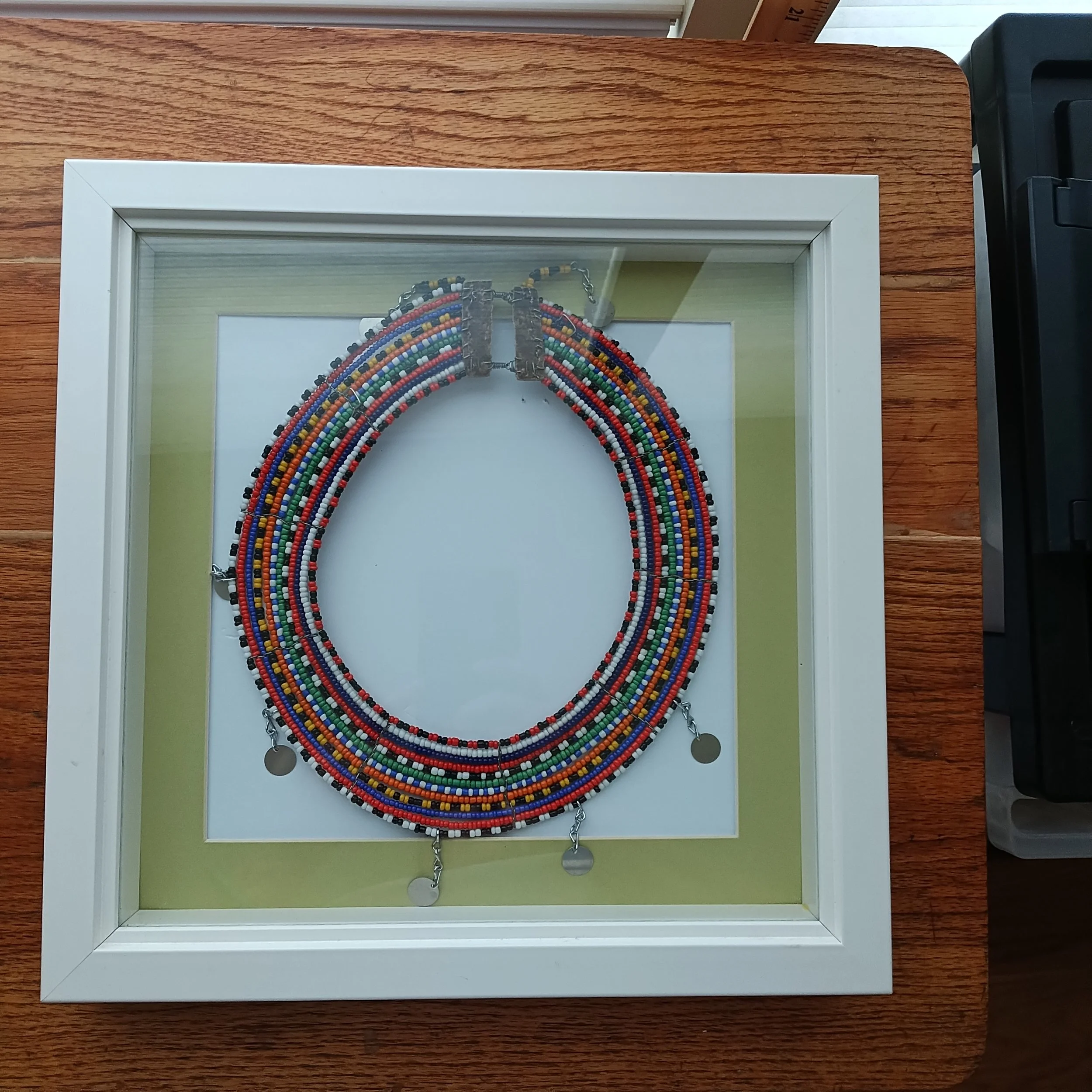 Image 2 of 5
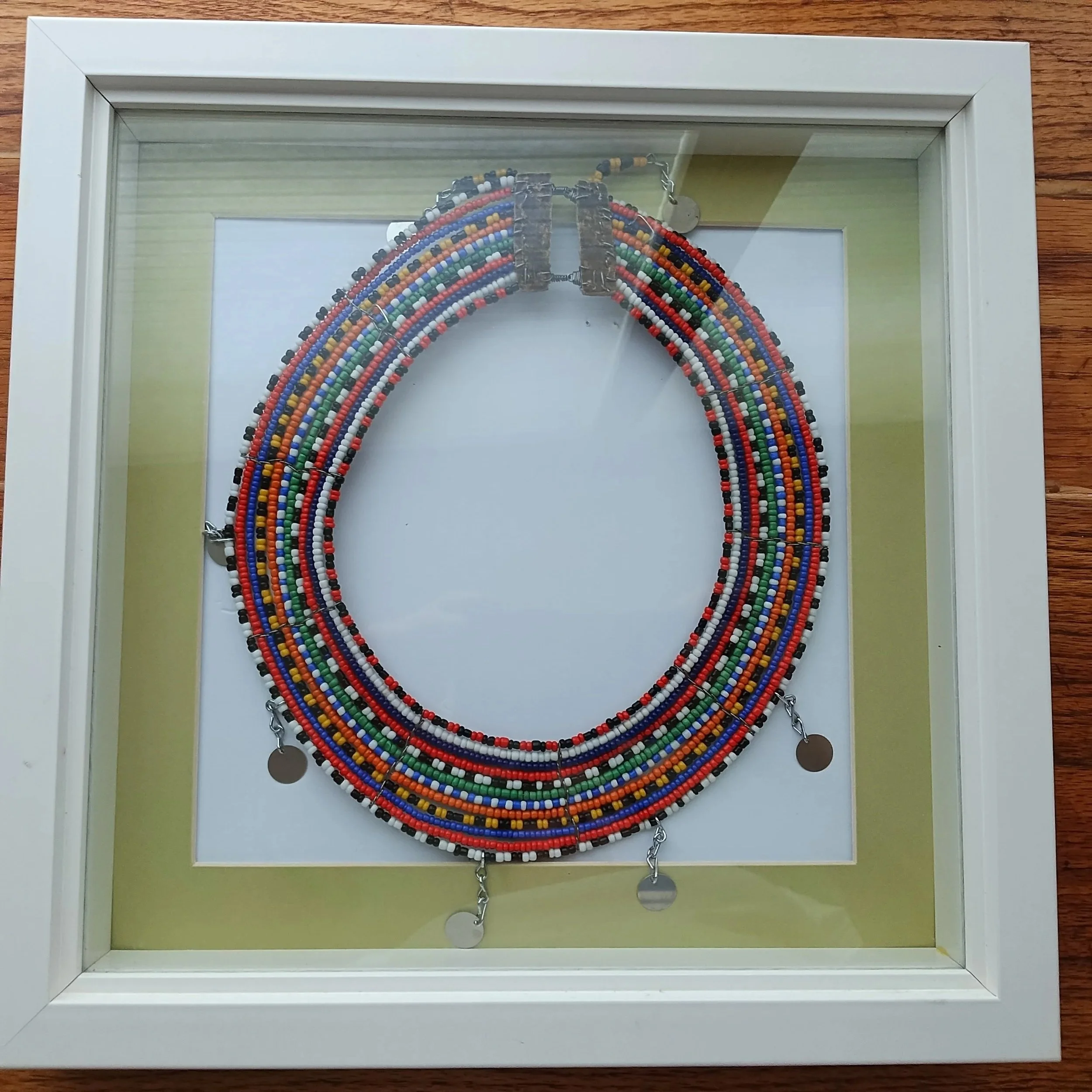 Image 3 of 5
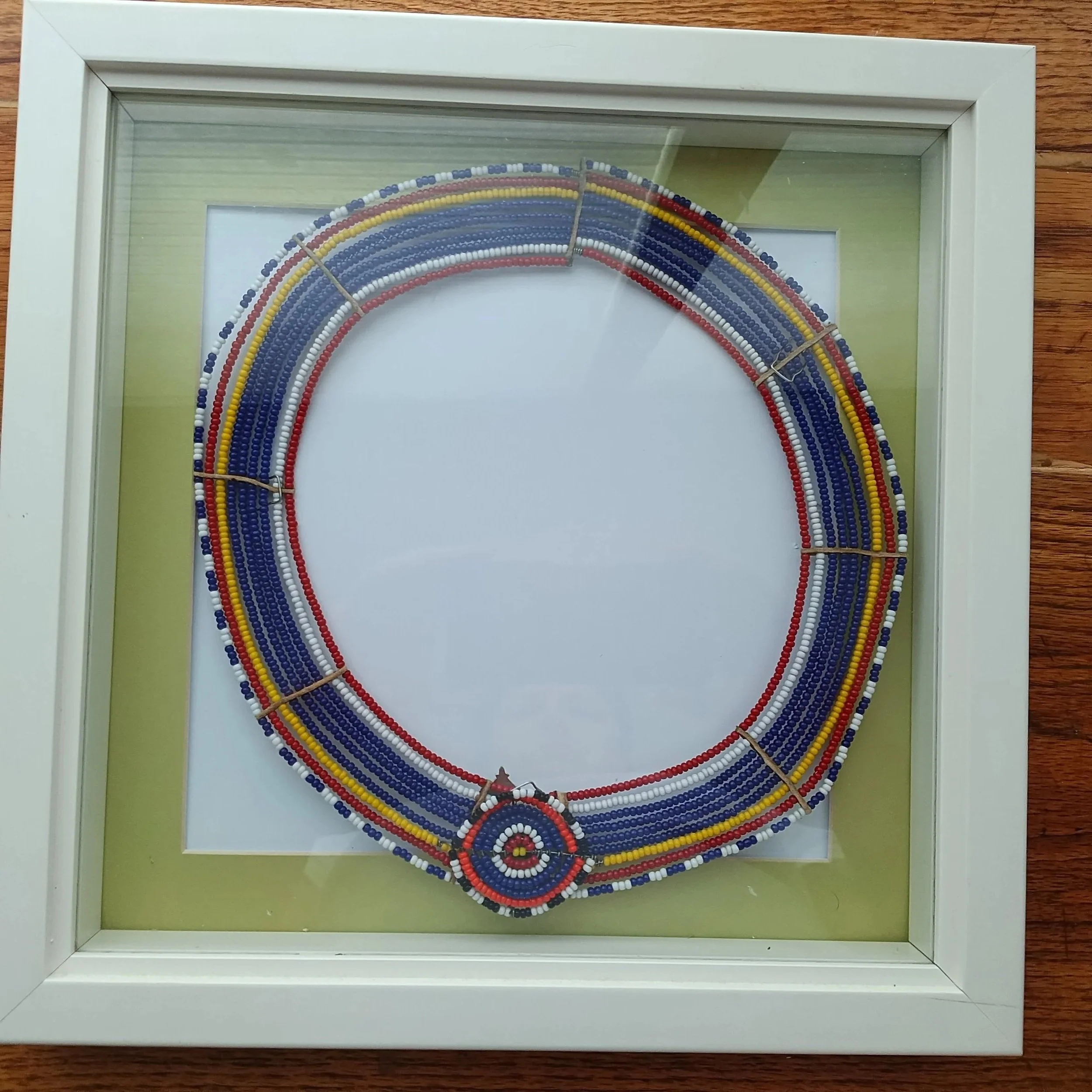 Image 4 of 5
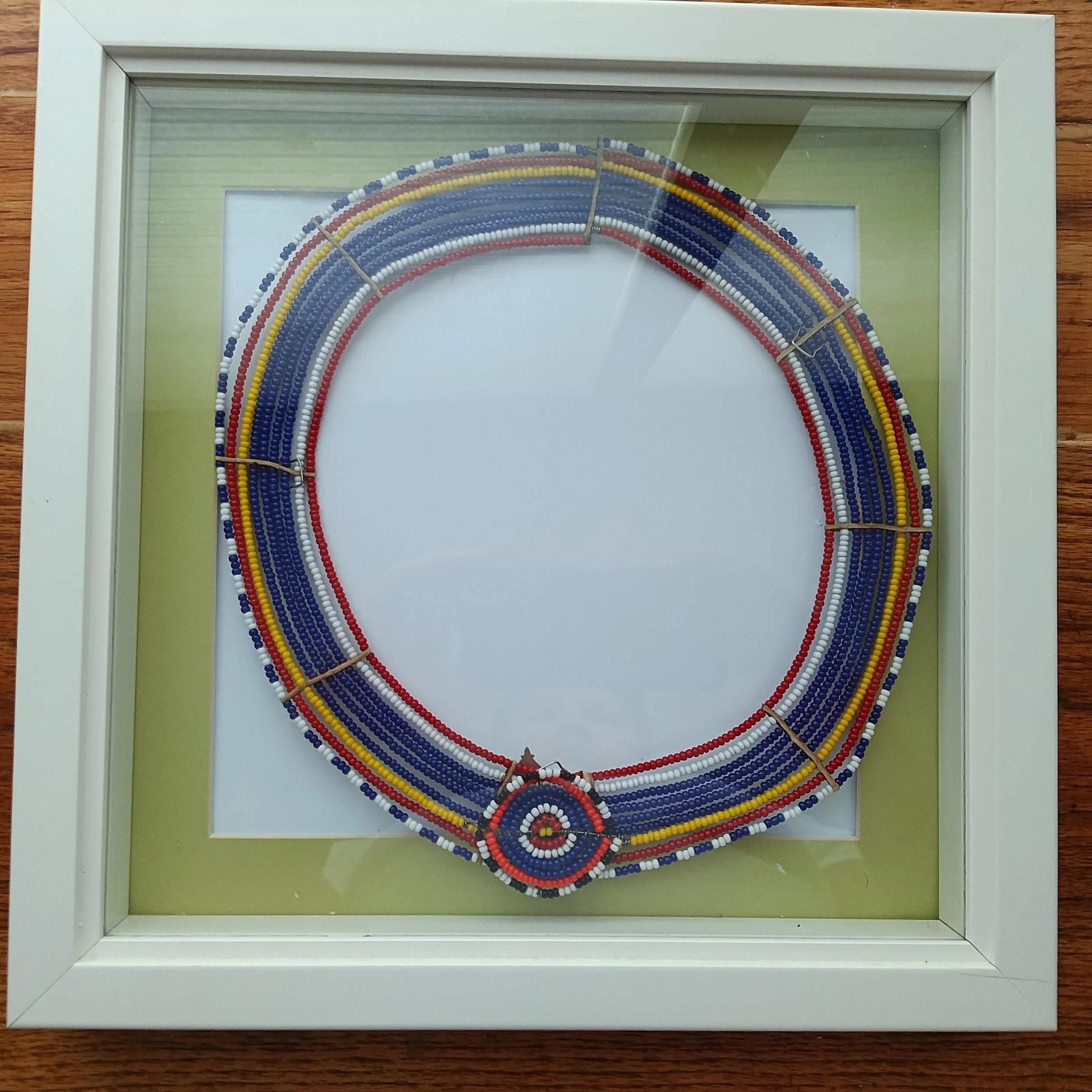 Image 5 of 5
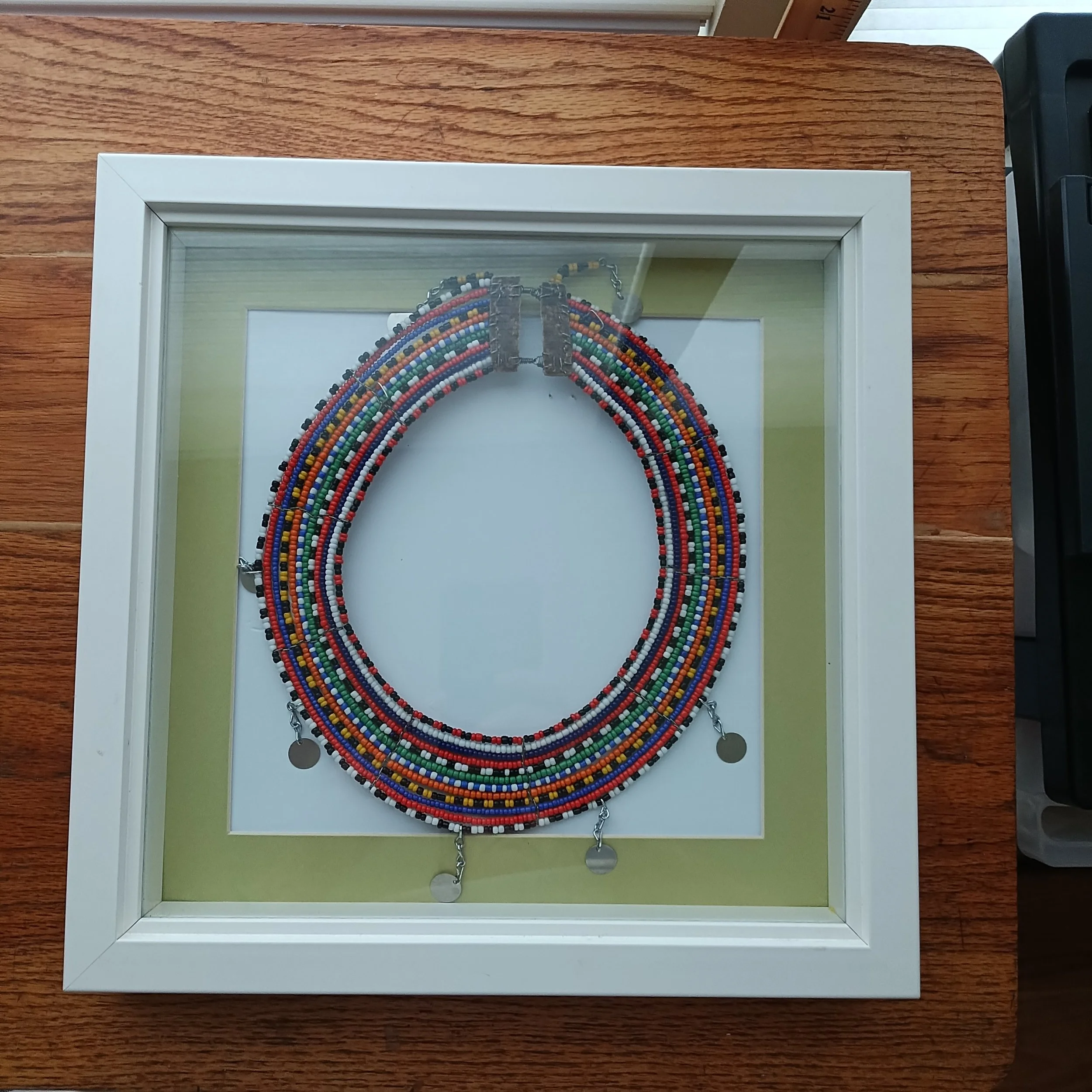
The price is for both framed (2) Tanzanian Maasai Beaded Collar — Framed Art
A striking celebration of East African craftsmanship, this framed art piece features an authentic Maasai beaded collar arranged and preserved beneath glass. Rich layers of tiny, hand-selected beads form concentric patterns of vibrant reds, blues, greens, and golds—colors that carry cultural meanings of bravery, community, and beauty. Mounted on a neutral background to highlight the collar’s intricate texture and symmetry, the work brings tactile, tribal elegance to any room. Ideal for living rooms, offices, or gallery walls, the piece honors Maasai tradition while offering a bold, wearable-like focal point that complements contemporary and global-inspired interiors. Each framed collar is a unique artifact; slight variations in beadwork and color reflect the hand-made origin and add authentic character.
itle: African Tribal Necklace as Framed Art
Description: A striking display piece that brings the rich textures and symbolic beauty of African tribal jewelry into a contemporary home. This composition centers on an authentic-style tribal necklace—handcrafted beads, brass accents, carved bone or wood elements—mounted and framed behind museum‑quality glass. The neutral linen mat and dark wood frame offer a simple, elegant surround that lets the necklace’s colors, patina, and intricate craftsmanship take center stage.
Why it works:
Cultural character: Tribal necklaces often incorporate patterns, materials, and forms that speak to identity, status, and tradition. Framing one preserves and highlights those visual stories in a way that’s respectful and contemplative.
Textural interest: Beads, metalwork, and organic components add depth and tactile appeal that translate well to a gallery wall or mantel vignette.
Versatility: The piece complements a range of interiors—from minimalist and modern to global eclectic—adding warmth and an artisan touch without overwhelming a space.
Conversation starter: A framed tribal necklace invites curiosity about origins, techniques, and meaning, encouraging viewers to learn more about the culture behind the object.
Styling suggestions:
Hang as a focal point above a console table or sofa, paired with low-profile accessories (books, a ceramic vase) so the artwork remains the visual anchor.
Create a small gallery grouping with other framed artifacts or neutral textile art for a layered global look.
Position near warm, directional lighting or a picture light to emphasize metallic highlights and carved details.
For a cohesive display, echo the frame finish in nearby wood furniture or picture frames.
Framing and preservation tips:
Use archival, acid‑free backing and mats to protect organic materials from deterioration.
Secure delicate elements with discreet mounting techniques (museum wax, stitched supports) rather than adhesives that can damage surfaces.
Keep the piece out of direct sunlight and away from high humidity or temperature fluctuations to preserve color and material integrity.
If the necklace is a genuine cultural artifact, consider consulting a conservator or the donor community about appropriate display and contextual labeling.
Sizing and placement:
For a single necklace, a frame size around 16 x 20 inches provides breathing room without feeling sparse; adjust larger for multi-strand or statement pieces.
Center the necklace at eye level (roughly 57–60 inches from the floor to the center of the artwork) when hanging alone.
In groupings, maintain consistent mat widths or frame finishes to achieve a unified appearance.
Context and respect: Displaying tribal jewelry as art can celebrate craftsmanship and cultural heritage when done thoughtfully. Whenever possible, provide provenance or contextual information on a plaque or label, acknowledge the originating community or region, and avoid presenting sacred or ceremonial objects in ways that strip them of meaning.
Materials and finishes (examples):
Frame: dark walnut or black-stained maple
Mat: linen or neutral cream archival mat
Glazing: museum glass (anti-reflective, UV-protective)
Mounting: museum board backing, stitched or supported mounts
A framed African tribal necklace brings warmth, texture, and meaningful visual storytelling to interior spaces while honoring the artistry behind the piece—when framed, preserved, and presented with care.
The price is for both framed (2) Tanzanian Maasai Beaded Collar — Framed Art
A striking celebration of East African craftsmanship, this framed art piece features an authentic Maasai beaded collar arranged and preserved beneath glass. Rich layers of tiny, hand-selected beads form concentric patterns of vibrant reds, blues, greens, and golds—colors that carry cultural meanings of bravery, community, and beauty. Mounted on a neutral background to highlight the collar’s intricate texture and symmetry, the work brings tactile, tribal elegance to any room. Ideal for living rooms, offices, or gallery walls, the piece honors Maasai tradition while offering a bold, wearable-like focal point that complements contemporary and global-inspired interiors. Each framed collar is a unique artifact; slight variations in beadwork and color reflect the hand-made origin and add authentic character.
itle: African Tribal Necklace as Framed Art
Description: A striking display piece that brings the rich textures and symbolic beauty of African tribal jewelry into a contemporary home. This composition centers on an authentic-style tribal necklace—handcrafted beads, brass accents, carved bone or wood elements—mounted and framed behind museum‑quality glass. The neutral linen mat and dark wood frame offer a simple, elegant surround that lets the necklace’s colors, patina, and intricate craftsmanship take center stage.
Why it works:
Cultural character: Tribal necklaces often incorporate patterns, materials, and forms that speak to identity, status, and tradition. Framing one preserves and highlights those visual stories in a way that’s respectful and contemplative.
Textural interest: Beads, metalwork, and organic components add depth and tactile appeal that translate well to a gallery wall or mantel vignette.
Versatility: The piece complements a range of interiors—from minimalist and modern to global eclectic—adding warmth and an artisan touch without overwhelming a space.
Conversation starter: A framed tribal necklace invites curiosity about origins, techniques, and meaning, encouraging viewers to learn more about the culture behind the object.
Styling suggestions:
Hang as a focal point above a console table or sofa, paired with low-profile accessories (books, a ceramic vase) so the artwork remains the visual anchor.
Create a small gallery grouping with other framed artifacts or neutral textile art for a layered global look.
Position near warm, directional lighting or a picture light to emphasize metallic highlights and carved details.
For a cohesive display, echo the frame finish in nearby wood furniture or picture frames.
Framing and preservation tips:
Use archival, acid‑free backing and mats to protect organic materials from deterioration.
Secure delicate elements with discreet mounting techniques (museum wax, stitched supports) rather than adhesives that can damage surfaces.
Keep the piece out of direct sunlight and away from high humidity or temperature fluctuations to preserve color and material integrity.
If the necklace is a genuine cultural artifact, consider consulting a conservator or the donor community about appropriate display and contextual labeling.
Sizing and placement:
For a single necklace, a frame size around 16 x 20 inches provides breathing room without feeling sparse; adjust larger for multi-strand or statement pieces.
Center the necklace at eye level (roughly 57–60 inches from the floor to the center of the artwork) when hanging alone.
In groupings, maintain consistent mat widths or frame finishes to achieve a unified appearance.
Context and respect: Displaying tribal jewelry as art can celebrate craftsmanship and cultural heritage when done thoughtfully. Whenever possible, provide provenance or contextual information on a plaque or label, acknowledge the originating community or region, and avoid presenting sacred or ceremonial objects in ways that strip them of meaning.
Materials and finishes (examples):
Frame: dark walnut or black-stained maple
Mat: linen or neutral cream archival mat
Glazing: museum glass (anti-reflective, UV-protective)
Mounting: museum board backing, stitched or supported mounts
A framed African tribal necklace brings warmth, texture, and meaningful visual storytelling to interior spaces while honoring the artistry behind the piece—when framed, preserved, and presented with care.