 Image 1 of 3
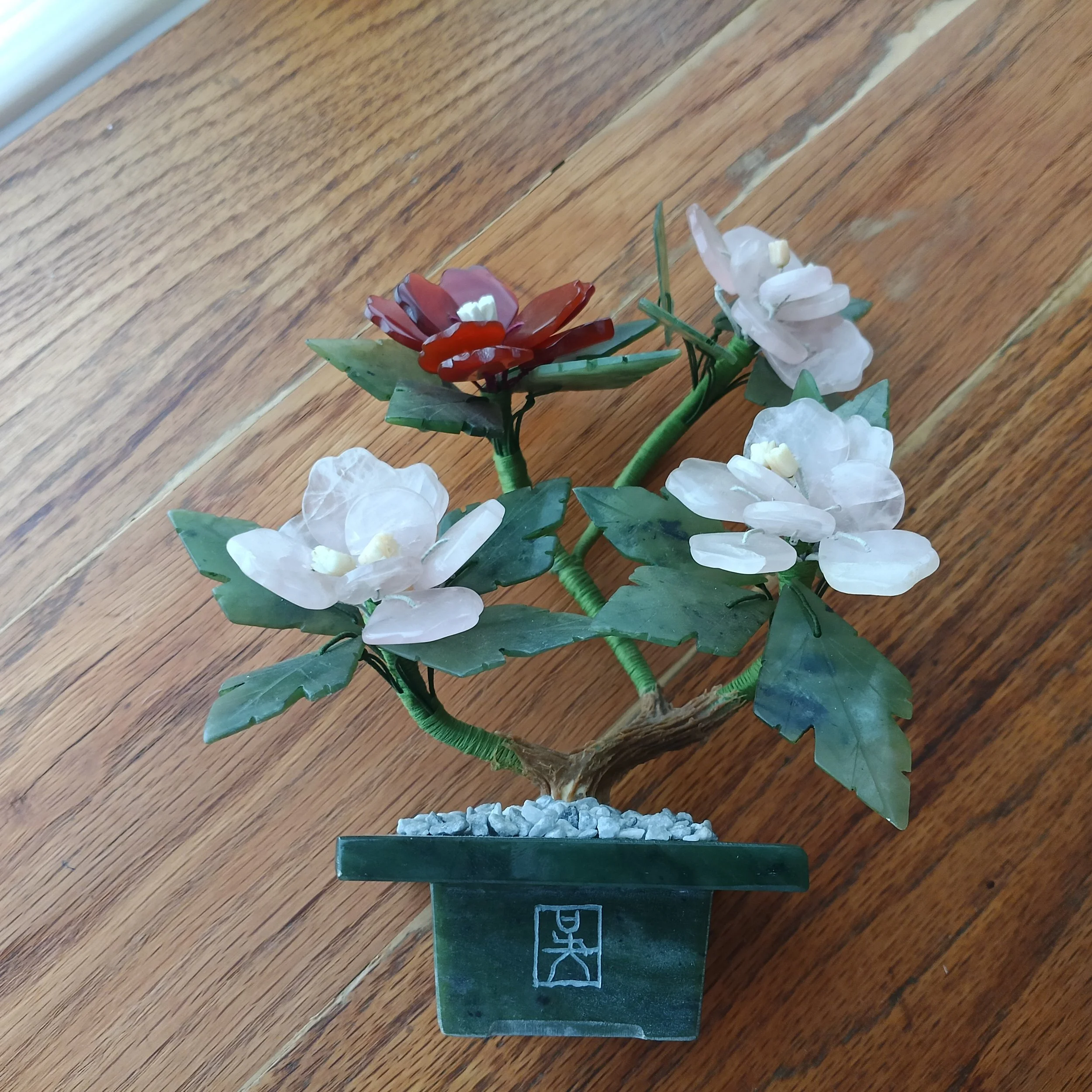 Image 2 of 3
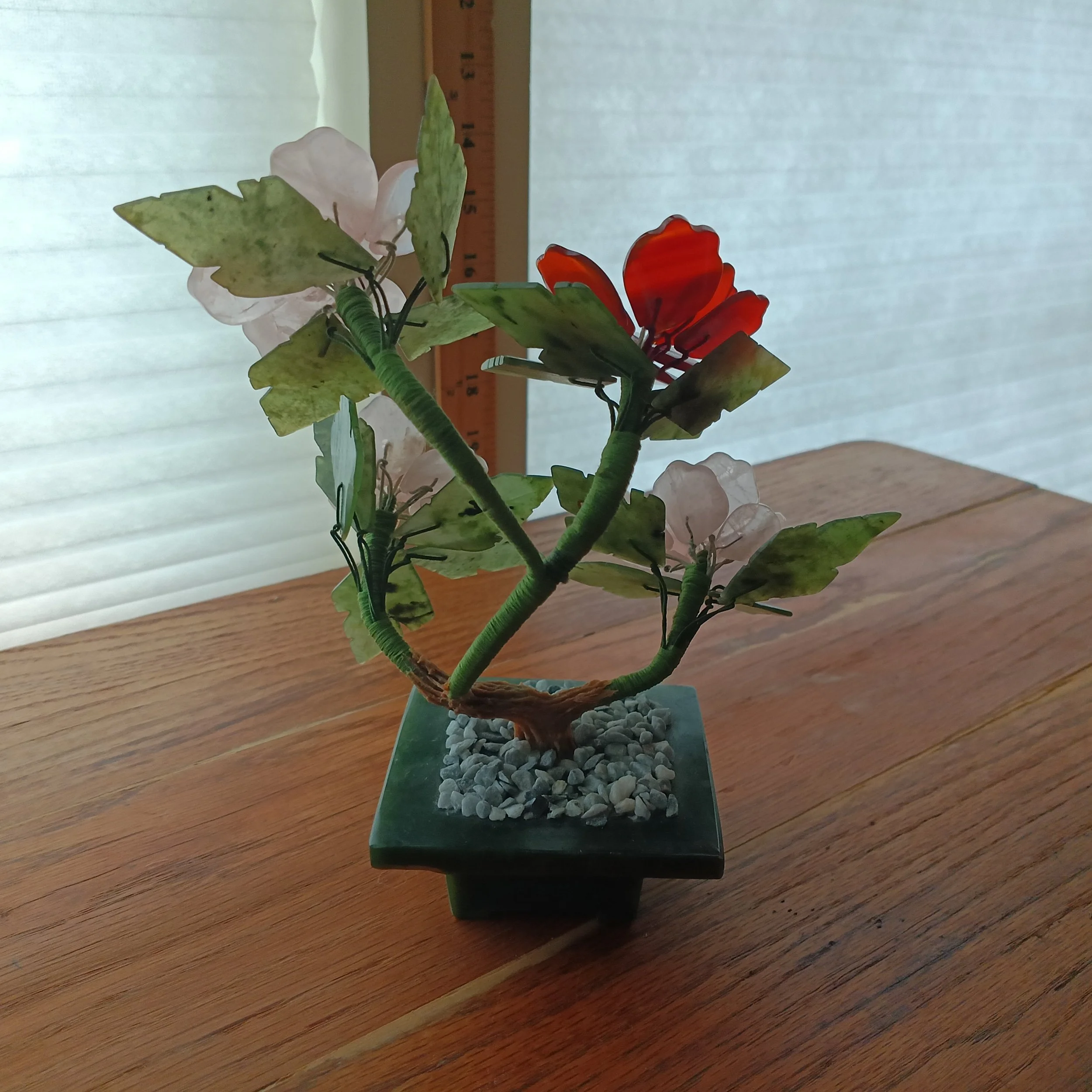 Image 3 of 3
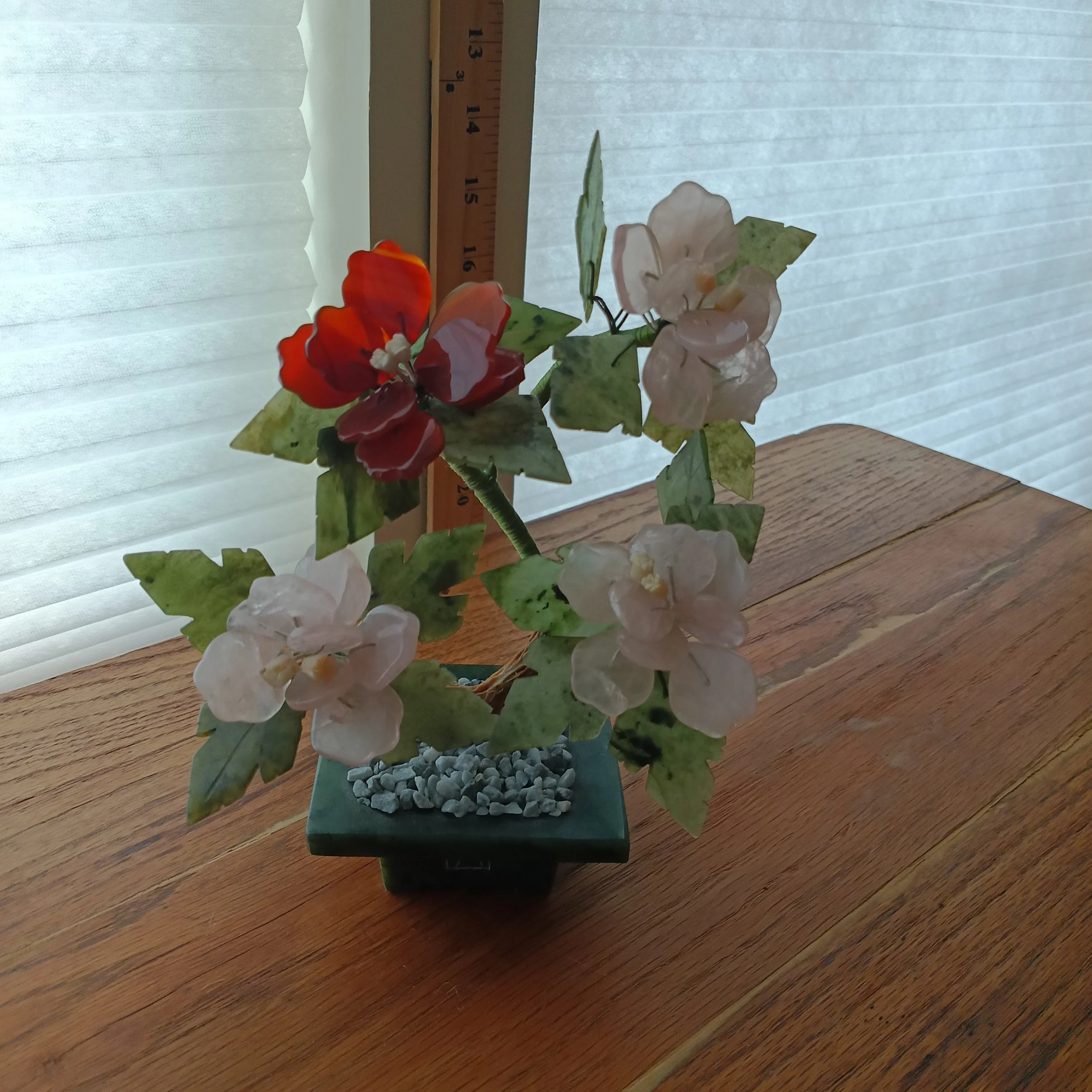
Vintage Chinese Jade Stone Bonsai
Chinese jade stone bonsai refers to miniature tree-like sculptures carved or arranged from jade, a precious stone long prized in Chinese culture for its beauty and symbolic meanings. These bonsai pieces blend the artistic traditions of Chinese jade carving with the aesthetic principles of bonsai—miniaturization, balance, and harmony—creating objects that function as both decorative art and cultural symbols.
History and Cultural Significance
Jade in China: Jade (including both nephrite and jadeite) has been valued in China for thousands of years as a material associated with purity, longevity, moral virtue, and social status. It appears in ritual objects, jewelry, and carvings.
Bonsai influence: Although bonsai is most famously associated with Japan, the practice of cultivating miniature trees has roots across East Asia, including Chinese penjing (often considered the precursor to modern bonsai). Chinese artisans adapted the concept into stone carving, rendering trees, trunks, foliage, and landscapes in jade.
Symbolism: Jade bonsai often represent enduring
Vintage Chinese Jade Stone Bonsai
Chinese jade stone bonsai refers to miniature tree-like sculptures carved or arranged from jade, a precious stone long prized in Chinese culture for its beauty and symbolic meanings. These bonsai pieces blend the artistic traditions of Chinese jade carving with the aesthetic principles of bonsai—miniaturization, balance, and harmony—creating objects that function as both decorative art and cultural symbols.
History and Cultural Significance
Jade in China: Jade (including both nephrite and jadeite) has been valued in China for thousands of years as a material associated with purity, longevity, moral virtue, and social status. It appears in ritual objects, jewelry, and carvings.
Bonsai influence: Although bonsai is most famously associated with Japan, the practice of cultivating miniature trees has roots across East Asia, including Chinese penjing (often considered the precursor to modern bonsai). Chinese artisans adapted the concept into stone carving, rendering trees, trunks, foliage, and landscapes in jade.
Symbolism: Jade bonsai often represent enduring